
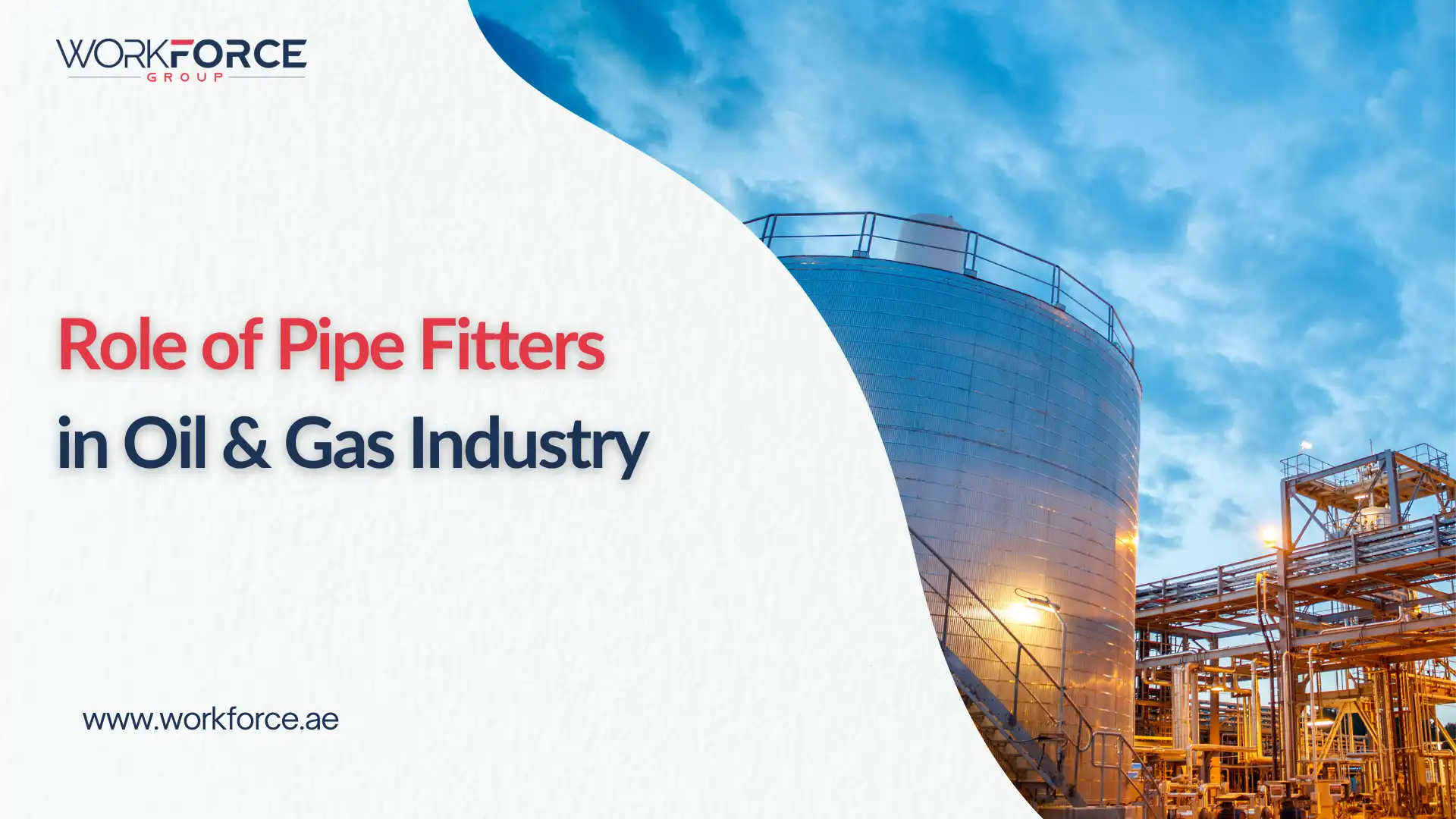
The oil and gas industry depends on precision.
Every refinery, offshore platform, and pipeline network relies on properly installed piping systems.
Pipe fitters play a major role in keeping these systems operational, safe, and efficient.
From assembling pipelines to maintaining pressure systems, pipe fitters support nearly every stage of industrial operations.
In the UAE, demand for skilled pipe fitters continues to grow due to refinery expansion, pipeline infrastructure projects, and industrial maintenance requirements.
Companies involved in EPC projects, shutdown maintenance, and offshore operations require experienced manpower to reduce delays and maintain safety standards.
Pipe fitting is a core activity in industrial construction and maintenance.
Oil and gas facilities contain complex piping systems used to transport crude oil, natural gas, steam, chemicals, and water under high pressure.
Pipe fitters install, align, cut, assemble, and maintain these systems according to engineering specifications.
Their work directly impacts plant safety and operational reliability.
Industrial pipe fitting requires technical knowledge, physical accuracy, and strict compliance with safety regulations.
Pipe fitters work closely with welders, fabricators, engineers, and supervisors during construction and maintenance activities.
In oil refineries and offshore facilities, even a minor pipe installation error can lead to leakage, production loss, or safety risks.
That is why companies invest heavily in skilled manpower.
Businesses looking for reliable industrial staffing often use services such as Oil & Gas Manpower Supply in Dubai to meet project deadlines and workforce requirements.
What Does a Pipe Fitter Do?
Pipe fitters install and maintain piping systems used in industrial environments.
Their responsibilities include:
- Measuring and cutting pipes
- Reading isometric drawings
- Assembling pipe sections
- Installing valves and fittings
- Performing pressure tests
- Supporting maintenance shutdowns
They work with materials such as:
- Carbon steel
- Stainless steel
- Copper
- PVC
- Alloy piping systems
Pipe fitters also ensure alignment accuracy before welding and system commissioning.
Why Oil & Gas Projects Need Skilled Pipe Fitters
Oil and gas facilities operate under extreme pressure and temperature conditions.
Improper pipe installation can result in:
- Equipment damage
- Production shutdowns
- Environmental risks
- Worker injuries
Skilled pipe fitters help companies maintain:
- Operational efficiency
- Regulatory compliance
- Leak prevention
- Safe fluid transportation
Experienced manpower also improves project completion speed during shutdown and turnaround activities.
Main Responsibilities of Pipe Fitters
Pipe fitters perform several technical tasks during construction and maintenance operations.
Their work begins during project installation and continues throughout facility operation.
They coordinate with engineers, QA/QC inspectors, and welding teams to ensure proper pipe system installation.
In industrial environments, pipe fitters must follow exact dimensions and technical specifications.
Even small alignment errors can affect pressure flow and system performance.
Pipe fitters also assist during refinery shutdowns where damaged or aging pipelines require replacement.
Their ability to work under strict timelines makes them valuable in high-demand oil and gas projects.
Many UAE contractors hire specialized manpower through Pipe Fitter Manpower Supply in Dubai to support industrial expansion and maintenance operations.
Pipe Installation and Assembly
Pipe fitters prepare and assemble piping systems according to project drawings.
This includes:
- Pipe cutting
- Grinding
- Threading
- Alignment
- Bolt tightening
They also install:
- Flanges
- Supports
- Valves
- Pressure control components
Accuracy is critical because piping systems carry hazardous materials under pressure.
Pipe fitters inspect systems for corrosion, leakage, and wear.
During shutdown maintenance, they replace damaged piping sections and support emergency repairs.
Routine maintenance helps prevent costly production interruptions.
Reading Technical Drawings
Pipe fitters use:
- Isometric drawings
- Piping layouts
- Engineering diagrams
These documents guide installation procedures and help maintain dimensional accuracy.
Understanding technical drawings reduces installation mistakes and improves workflow coordination.
Industries and Projects That Require Pipe Fitters
Pipe fitters are required across multiple industrial sectors.
However, oil and gas remains one of the largest employers of skilled pipe fitting manpower.
Large industrial projects involve thousands of meters of piping systems connected to pumps, boilers, compressors, and processing units.
Pipe fitters support both new construction and ongoing maintenance work.
In the UAE, demand is especially strong in refinery upgrades, offshore projects, and infrastructure expansion.
Industrial contractors often maintain standby manpower teams to support urgent shutdown activities.
Pipe fitters are also needed in:
- Petrochemical plants
- LNG facilities
- Power stations
- Water treatment plants
- Marine projects
Oil Refineries
Refineries contain highly complex piping networks.
Pipe fitters install and maintain systems responsible for transporting crude oil, steam, chemicals, and fuel products.
Shutdown maintenance in refineries requires experienced manpower capable of working under strict schedules.
Offshore Oil Platforms
Offshore environments present additional challenges such as:
- Limited workspace
- Corrosion exposure
- High humidity
- Safety risks
Pipe fitters working offshore must follow strict safety and inspection standards.
Pipeline Infrastructure Projects
Pipeline projects involve long-distance transportation systems.
Pipe fitters support:
- Pipe alignment
- Joint preparation
- Valve installation
- Pressure testing
Their work ensures safe and uninterrupted product flow.
Skills Required for Oil & Gas Pipe Fitters
Oil and gas pipe fitting requires technical ability and practical experience.
Pipe fitters must understand industrial systems and work efficiently under demanding site conditions.
Many companies prefer workers with refinery or offshore experience because industrial environments require strict procedural compliance.
Pipe fitters also need strong coordination skills.
They regularly communicate with:
- Engineers
- Welders
- Supervisors
- Safety officers
- QA/QC inspectors
Physical endurance is equally important because pipe fitting work often involves heavy lifting and long working hours.
Skilled manpower improves productivity and reduces costly installation errors.
Companies hiring trained pipe fitters benefit from faster execution and safer operations.
Technical Skills
Pipe fitters should understand:
- Pipe measurement
- System alignment
- Valve installation
- Industrial materials
- Pressure systems
Knowledge of industrial tools and equipment is essential.
Safety Knowledge
Oil and gas sites involve hazardous conditions.
Pipe fitters must follow:
- PPE requirements
- Permit-to-work systems
- Fire safety procedures
- Confined space regulations
Safety awareness reduces accident risks.
Team Coordination
Pipe fitting projects require teamwork.
Workers coordinate with multiple departments to complete installation and maintenance activities efficiently.
Strong communication improves project execution.
Importance of Safety in Pipe Fitting
Safety is one of the most important parts of pipe fitting work.
Oil and gas facilities contain flammable materials, pressurized systems, and hazardous chemicals.
Pipe fitters operate in environments where strict safety procedures are mandatory.
Industrial accidents can cause:
- Equipment failure
- Environmental damage
- Serious injuries
- Production shutdowns
That is why companies prioritize trained workers with proper safety certifications.
Before beginning work, pipe fitters often participate in toolbox talks, risk assessments, and permit approval procedures.
Safety inspections are also conducted throughout installation and maintenance activities.
Following safety standards protects both workers and industrial assets.
Common Hazards on Site
Pipe fitters may face:
- Hot work risks
- Gas exposure
- High-pressure leaks
- Working at heights
- Heavy equipment movement
Awareness and preparation help reduce workplace incidents.
Safety Standards and Compliance
Industrial projects follow strict safety regulations.
Pipe fitters must comply with:
- OSHA standards
- Company safety policies
- Permit systems
- PPE requirements
Compliance improves operational reliability and worker protection.
Benefits of Hiring Professional Pipe Fitters
Hiring experienced pipe fitters improves project quality and operational efficiency.
Industrial piping systems require precision installation.
Poor workmanship can result in leaks, pressure loss, or costly repairs.
Professional pipe fitters help companies maintain project timelines while meeting engineering and safety requirements.
Skilled manpower also reduces rework.
This is especially important in large oil and gas projects where delays can increase operational costs significantly.
Professional pipe fitters contribute to:
- Better productivity
- Reduced downtime
- Improved safety
- Faster maintenance execution
Reliable manpower support becomes critical during shutdown projects where timelines are extremely limited.
Reduced Downtime
Experienced pipe fitters complete installation and repair work efficiently.
Faster execution reduces production interruptions and operational delays.
Improved Project Quality
Professional workmanship improves system durability and leak prevention.
Correct installation also supports long-term operational stability.
Cost Efficiency
Reducing installation errors lowers repair and maintenance costs.
Efficient manpower deployment also improves project budget control.
Pipe Fitter Manpower Supply
Dubai remains a major hub for industrial construction and oil and gas support services.
Large-scale projects require qualified manpower capable of meeting strict operational standards.
Many companies prefer outsourcing pipe fitting manpower because it provides flexibility and faster workforce deployment.
Manpower suppliers help businesses scale operations without handling direct recruitment challenges.
This approach is common during:
- Refinery shutdowns
- EPC construction projects
- Offshore maintenance work
- Pipeline expansion projects
Reliable manpower partners provide trained workers ready for immediate deployment.
Why Companies Outsource Pipe Fitters
Outsourcing helps companies:
- Reduce hiring time
- Access skilled workers quickly
- Handle temporary project demand
- Improve workforce flexibility
It also reduces administrative and recruitment burdens.
Choosing the Right Manpower Supplier
A reliable manpower supplier should provide:
- Skilled industrial workers
- Safety-trained manpower
- Fast deployment capability
- Industry experience
- UAE compliance support
Companies should evaluate manpower quality before project mobilization.
Conclusion
Pipe fitters play a critical role in oil and gas operations.
Their work supports pipeline installation, refinery maintenance, offshore projects, and industrial infrastructure development.
Without skilled pipe fitting manpower, industrial systems cannot operate safely or efficiently.
As UAE oil and gas projects continue to expand, demand for trained pipe fitters will remain strong.
Businesses that invest in qualified manpower improve:
- Project quality
- Operational safety
- Maintenance efficiency
- Long-term reliability
For industrial projects in the UAE, experienced manpower support remains essential for successful execution.